The Best Primers for Women Over 40 for Smooth Radiant Skin
- Lena Krupka

- Jul 29
- 5 min read
Primer can be the difference between makeup that looks fresh at noon and foundation that settles into every tiny line by lunch. The trick is picking one that works with skin texture, hydration, and glow, not just one that promises to “blur everything.”
Skin often gets drier with age because oil production slows down. The American Academy of Dermatology also notes that skin can become thinner and less elastic over time. That doesn’t mean makeup has to look heavy or flat. It just means the best primers for women over 40 usually do more than grip foundation. They hydrate, soften texture, add radiance, or calm redness before makeup ever touches the skin.
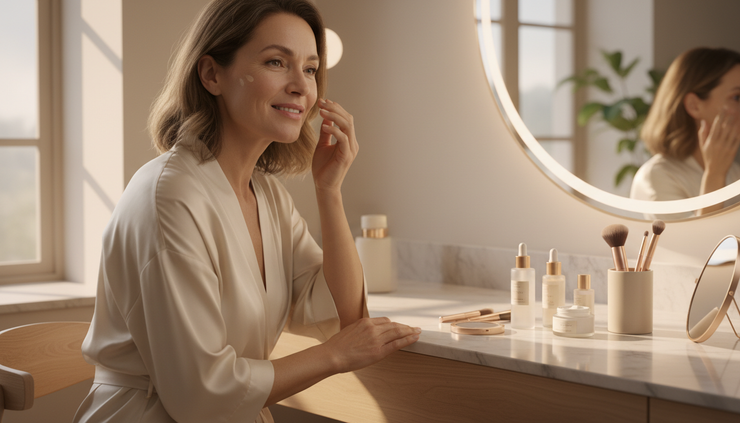
What makes a primer work well after 40
A good primer for mature skin should solve one clear problem. If it tries to mattify, glow, fill pores, hydrate, color-correct, and act like skincare all at once, it may do none of those things well.
The main things to look for are:
Hydration
Ingredients like glycerin, hyaluronic acid, squalane, and aloe help skin look plumper and smoother before foundation.
Soft-focus texture
Silicones such as dimethicone can create a smooth surface over pores and fine lines. They don’t erase texture, but they can soften how it looks.
Comfort
A primer should not make skin feel tight, sticky, or dry after a few minutes.
Compatibility
Water-based primers usually pair best with water-based foundations. Silicone-rich primers often pair better with silicone-based foundations. Mixing formulas can sometimes cause pilling.
A natural finish
For mature skin makeup, a satin or softly radiant finish often looks fresher than a flat matte one.
The best primer types for smooth radiant skin
There isn’t one perfect primer for everyone. The best choice depends on what your skin is doing that day. Here’s how to match the formula to the result you want.
Primer type | Best for | Look for |
Hydrating primer | Dryness, tightness, dullness | Glycerin, hyaluronic acid, squalane |
Smoothing primer | Pores, fine lines, uneven texture | Dimethicone, silica, soft-focus powders |
Illuminating primer | Dull or tired-looking skin | Subtle pearl, mica, light-reflecting pigments |
Gripping primer | Makeup that fades fast | A light tacky finish, gel texture |
Color-correcting primer | Redness or sallowness | Green, peach, or lavender tint |
SPF primer | Daytime makeup | Broad-spectrum sunscreen listed on the label |
A hydrating primer is the safest everyday pick
If foundation clings to dry patches or looks crepey, start here. Hydrating primers create a cushion between skincare and makeup. They’re especially helpful around the cheeks, mouth, and under-eye area, where makeup can look dry fast.
Look for a lightweight lotion or gel-cream texture. If it feels like skincare, that’s usually a good sign. Let it sit for a minute before foundation so it has time to settle.
A smoothing primer helps texture look softer
Smoothing primers are ideal for pores, fine lines around the mouth, and uneven areas near the nose or chin. Silicone-based formulas are common here because they create slip and help foundation glide instead of dragging.
Use less than you think. A pea-size amount is usually enough for the center of the face. Too much smoothing primer can roll up under foundation.

When glow primer helps and when it’s too much
Illuminating primer can make skin look awake, especially when foundation looks flat. The best versions have a fine sheen, not visible glitter. Think candlelight, not sparkle.
Use glow primer on the high points of the face:
Tops of the cheekbones
Center of the forehead
Bridge of the nose
A tiny amount above the brows
Skip heavy shimmer near pronounced texture if it bothers you. Light-reflecting particles can draw attention to bumps or lines when they’re too large. A subtle pearl finish is more flattering than obvious shine.
A nice trick is to mix a small amount of illuminating primer with foundation. This sheers out coverage and gives a softer finish without adding extra layers.
How to choose based on your skin that day
Skin changes with weather, sleep, stress, hormones, and skincare. The primer that worked beautifully in July may feel wrong in January.
Here’s a simple way to choose in the morning.
If skin feels tight
Use a hydrating primer. Give moisturizer a few minutes to absorb first.
If foundation sinks into pores
Use a smoothing primer only where pores are most visible. Don’t spread it everywhere unless you need it.
If makeup disappears quickly
Use a gripping primer on the T-zone or areas where makeup breaks down.
If skin looks flat
Use an illuminating primer under light or medium coverage foundation.
If redness shows through
Use a sheer green color-correcting primer, then apply foundation in thin layers. Too much green can look gray, so start small.

Application mistakes that make primer look worse
Primer works best in thin layers. It’s easy to use too much, especially with formulas that feel silky or cooling.
Avoid these common mistakes:
Applying primer right after moisturizer while skin is still slippery
Rubbing foundation aggressively over primer
Using a matte primer on already dry skin
Layering several primers all over the face
Expecting primer to hide texture completely
Try pressing primer into the skin instead of rubbing it. Then apply foundation with a damp sponge or soft brush using light pressure. Thin layers look smoother than one thick coat.
Also, check your skincare. If sunscreen, moisturizer, primer, and foundation all have different bases, pilling is more likely. When products ball up, it’s often a formula mismatch or too much product, not your skin.
My top primer picks by need
You don’t need a drawer full of primers. Two well-chosen formulas can cover most days.
Best everyday primer
Choose a hydrating smoothing primer with glycerin and a small amount of silicone. This gives comfort and polish without looking heavy.
Best for dry skin
Choose a creamy hydrating primer with squalane, hyaluronic acid, or ceramides. Avoid strong mattifying claims.
Best for visible pores
Choose a silicone-based smoothing primer. Apply it only to the nose, cheeks, chin, or forehead where texture shows.
Best for glow
Choose a sheer illuminating primer with fine pearl. Avoid chunky shimmer.
Best for long wear
Choose a gripping gel primer, but use it sparingly. These can feel tacky, which helps makeup hold, but too much can make foundation patchy.
Best for redness
Choose a sheer green primer if redness is mild. For stronger redness, a thin color corrector under foundation may work better than a full-face tinted primer.

The simple primer routine that works
Start with skincare and give each layer a moment to settle. Then use primer only where it helps.
A simple routine looks like this:
Cleanse or rinse.
Apply moisturizer.
Apply sunscreen for daytime.
Wait a few minutes.
Press primer onto the areas that need it.
Apply foundation in thin layers.
The best primers, makeup over 40, women over 40, mature skin makeup all come back to the same idea: use less product, choose the right texture, and let skin still look like skin.
A hydrating primer is the best first buy for most people. Add a smoothing primer if texture bothers you, or an illuminating one if your foundation needs more life. When primer matches your skin instead of fighting it, makeup looks softer, fresher, and much more natural.



Comments